
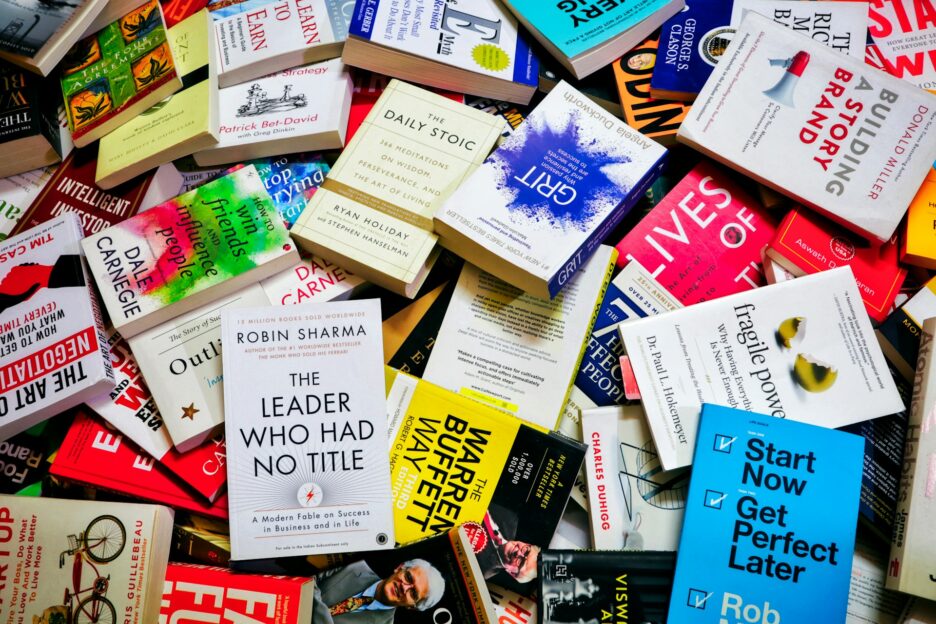
There was a time when a glowing quote from a respected critic or a well-placed display at Waterstones could make a novel. That machinery still exists, but it has been quietly sidelined by something far less controllable and far more powerful: ordinary readers talking to each other online. This shift reflects a genuine change in who people trust when deciding what to read next — and understanding it is now essential for anyone building a career or business in publishing.
The Trust Gap Between Advertising and Authentic Voices
When did you last buy a book because of a publisher ad? Compare that with how often you picked something up on a friend’s recommendation, or because a stranger on Goodreads whose taste matched yours was enthusiastic about it. Marketing budgets in publishing are modest. A mid-list novel might get a few social media posts and a handful of advance copies sent to bloggers — but not the kind of sustained campaign that makes a product feel inescapable. Critical attention and retail placement used to compensate for that gap. Both levers have weakened.
What has replaced them is a culture of peer recommendation playing out across Goodreads, StoryGraph, BookTok, Bookstagram, and countless newsletters and podcasts. The common thread is authenticity. A 2023 Pew Research Center survey found that word-of-mouth remains the top way American adults discover books, with online community recommendations pulling well ahead of traditional media. Publishers who ignore that data are navigating by an outdated map.
What the Data Actually Shows About Reviews and Sales

The relationship between reader reviews and commercial performance is not just anecdotal. Several patterns have become clear enough that publishers and self-published authors are now actively building review acquisition into their pre-launch strategy, not as an afterthought but as a core component.
On Amazon, the most scrutinized retail environment in book selling, the impact of early reviews is well documented. Books that cross the fifty-review threshold tend to see a significant boost in algorithmic visibility, appearing more frequently in “customers also bought” sections and recommended email digests. This is not about gaming the system; it is about the way the platform interprets social proof as a signal of relevance. A book with three hundred reviews, even if they are mixed, will almost always outperform a book with twelve reviews that are uniformly positive.
Goodreads, now used by over 150 million registered members, functions differently but with equally significant commercial implications. A book that generates discussion on Goodreads — genuine lists, want-to-read additions, shelf placements, and reviews — benefits from the platform’s own recommendation engine, which surfaces titles to users based on the reading habits of people with similar taste profiles. Authors who cultivate genuine Goodreads communities around their work report higher conversion rates from browsers to buyers than those who rely solely on publisher outreach.
| Platform | Primary Influence on Sales | Key Metric to Watch |
| Goodreads | Discovery via reading taste profiles | Want-to-read adds + review volume |
| Amazon | Algorithmic visibility | Review count + verified purchases |
| TikTok (BookTok) | Viral discovery, impulse buying | Video views + comment sentiment |
| StoryGraph | Niche community trust | Mood/pace tags + ratings |
| Instagram (Bookstagram) | Visual discovery, community loyalty | Saves, shares, story mentions |
BookTok is the clearest recent example of this dynamic. Colleen Hoover’s resurgence, and dozens of backlist titles that sold hundreds of thousands of copies after a single video went viral, demonstrate the same thing: a credible, emotionally genuine recommendation from a trusted voice can trigger a purchasing response that paid advertising simply cannot replicate reliably.
What Authors and Publishers Should Actually Do About It
Building a strategy around reader reviews means reconsidering some long-held instincts. A blurb from a famous author still has value, but it will not move copies the way it once did. What moves copies now is a wave of early readers willing to talk about a book publicly, in their own words, to their own audiences — which means ARC programs need to prioritize active online communities alongside journalists. It also means resisting the urge to treat negative reviews as damage to control. Books with only five-star ratings read as suspicious. Honest, mixed feedback signals authenticity; some of the most commercially successful Goodreads titles sit at an average of 3.7 or 3.8, precisely because the volume and diversity of responses shows genuine engagement.
Practical steps that consistently produce results:
- Building an ARC (Advance Reader Copy) list that prioritizes active online reviewers over passive recipients
- Engaging directly with reader communities on Goodreads and StoryGraph before and after publication, not just during launch week
- Encouraging readers to post honest reviews on multiple platforms rather than just one
- Tracking qualitative review sentiment, not just star averages, to understand what is genuinely resonating
- For self-published authors: budgeting review outreach as a line item, not an optional extra
None of this is a guarantee — books that do everything right still sometimes disappear quietly, and occasionally a title with no promotion whatsoever catches fire entirely on its own. But the direction of travel in the industry is clear enough. The readers who talk about, argue over, champion, and occasionally savage books online have become the most important marketing force that publishing has ever had. The smartest move for authors and publishers alike is to stop trying to manage that conversation from the outside and start figuring out how to genuinely be part of it.